The Digital Blueprint of Modern Construction
For decades, the construction industry relied on physical blueprints and manual oversight. Today, the landscape is shifting toward a digital-first approach where data is as vital as steel.
Artificial Intelligence is no longer a futuristic concept for large-scale infrastructure; it is becoming a standard tool for residential and commercial contractors alike.
By integrating AI, firms are finding ways to reduce waste, predict delays, and protect their most valuable asset: their people. It is a quiet revolution that is making the job site smarter and safer.
In this guide, we will explore the most impactful AI tools currently reshaping construction workflows. These selections focus on real-world utility and ease of adoption for growing businesses.
AI for Precise Estimation and Bidding
One of the most stressful parts of the construction business is the bidding process. An inaccurate estimate can lead to lost profits or a missed opportunity entirely.
Togal.AI has emerged as a leader in this space. It uses machine learning to automatically detect and measure project scope from architectural drawings, completing in seconds what used to take days.
For example, instead of a human estimator manually clicking through every wall and floor area, the AI identifies these elements instantly, allowing the team to focus on strategy rather than counting.
Kreo is another powerful option, offering AI-driven quantity takeoff and scheduling. It allows users to visualize the cost impact of design changes in real-time, providing a level of agility that was previously impossible.
Optimizing Project Management and Schedules
Managing a complex timeline with dozens of subcontractors is a logistical puzzle. AI tools now act as digital project coordinators, predicting bottlenecks before they happen.
Alice Technologies uses generative AI to simulate thousands of different construction schedules. It helps managers find the “optimum path” that balances speed, cost, and resource availability.
Think of it like a GPS for your project. If a shipment of lumber is delayed, the AI can recalculate the entire site schedule to keep workers productive elsewhere while you wait.
Procore, a name familiar to many, has also integrated AI features that help identify high-risk items in your daily logs. It flags potential issues that might lead to a rework or a dispute down the road.
Enhanced Site Safety and Monitoring
Safety is the top priority for any reputable construction firm. AI is now being used to monitor sites through computer vision, identifying hazards that a human might miss.
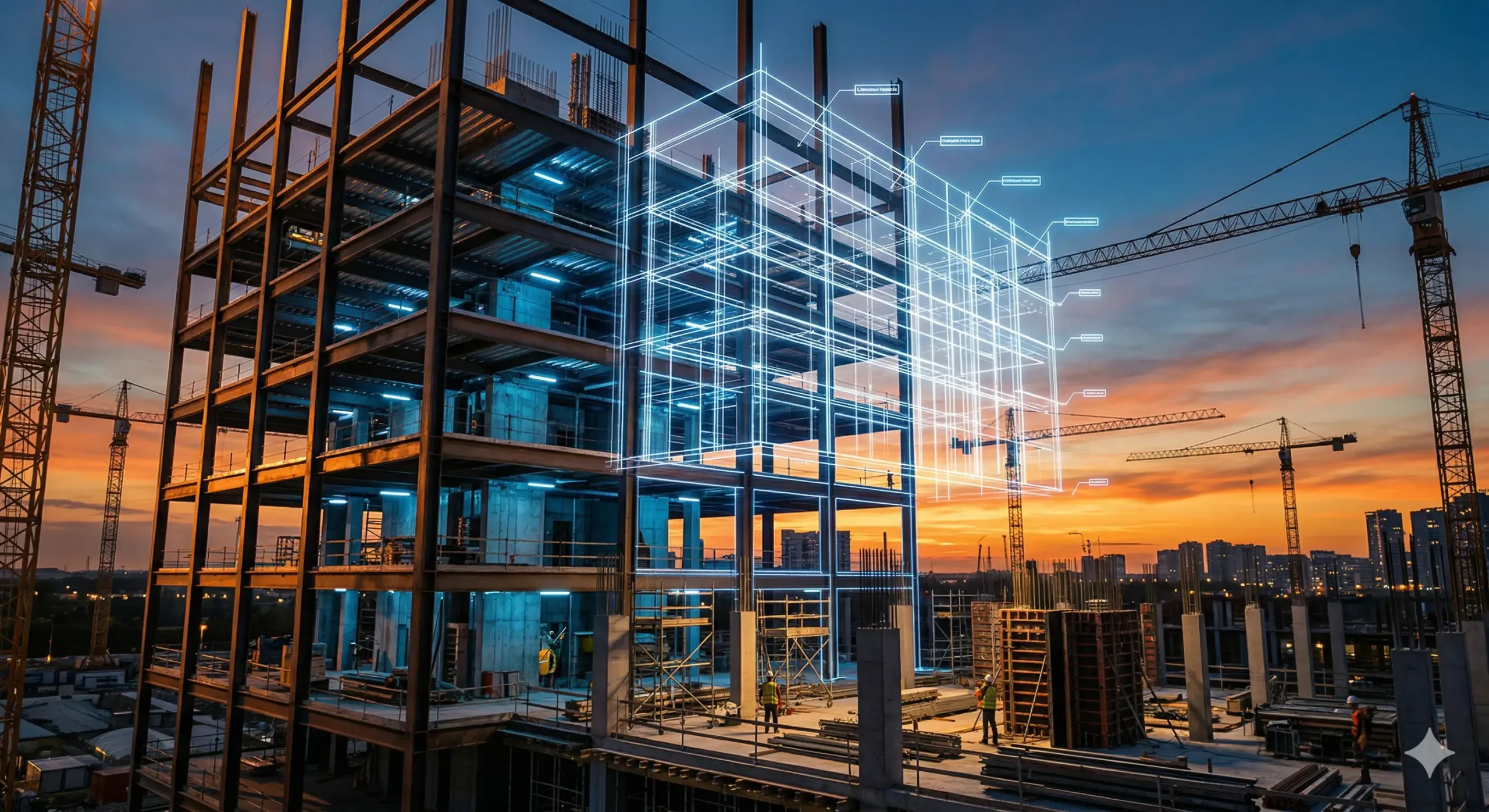
Viatechnik and OpenSpace utilize 360-degree cameras and AI to create digital twins of the job site. The AI automatically maps photos to the project plan, creating a visual record of progress.
More importantly, these tools can detect if a worker is missing their hard hat or if a railing is missing from a high-risk area. It acts as a 24/7 safety officer that never gets tired.
By catching these small infractions early, clinics and clinics of construction workers stay safe, and the company avoids costly OSHA fines and insurance hikes.
Design Highlight: Generative Design in BIM
Building Information Modeling (BIM) has reached a new level with generative design. Tools like Autodesk Forma allow architects and builders to test site layouts based on environmental factors like sunlight and wind.
- Rapid Iteration: Generate 50+ site layouts in the time it takes to draw one manually.
- Environmental Impact: Automatically calculate energy efficiency before breaking ground.
- Noise Mitigation: Simulate how traffic noise will affect a building’s interior comfort.
Construction AI Statistics for 2026
The data clearly shows that the adoption of AI is no longer a luxury, but a necessity for staying competitive in a tight market.
- 35% Reduction: Firms using AI for scheduling report an average 35% reduction in project duration.
- 20% Savings: AI-powered estimation tools have helped contractors save up to 20% on material waste.
- Safety Boost: Sites using computer vision for safety monitoring have seen a 40% drop in preventable accidents.
- Adoption Growth: Over 65% of mid-to-large construction companies now use at least one AI-driven tool in their daily operations.
How to Start Integrating AI in Your Business
Transitioning to AI does not mean you have to replace your entire staff or your current software. The best way to start is by identifying your biggest pain point.
If your team spends too much time on data entry, start with an AI-enabled project management tool. If your bids are often inaccurate, look into AI takeoff software.
Most of these tools offer “lite” versions or trial periods. It is better to master one tool that solves a specific problem than to overwhelm your team with five new platforms at once.
Remember that the human element is still the most important. The AI provides the data, but your experienced project managers provide the context and the final decision-making power.
Notes for Smooth Implementation
- Clean Your Data: AI is only as good as the information it processes. Ensure your current project logs and historical data are organized.
- Staff Buy-in: Explain to your crew that AI is there to help them, not replace them. It removes the “busy work” so they can focus on their craft.
- Interoperability: Look for AI tools that integrate with the software you already use, like Procore, Autodesk, or Microsoft 365.
- Security First: Ensure any AI tool you use has strong data encryption to protect your sensitive project and client information.
Conclusion: Building for the Future
The construction industry has always been defined by its ability to adapt and overcome physical challenges. Now, we are learning to overcome digital ones.
The best AI tools of 2026 are making it possible for smaller firms to compete on a global scale. They are bringing a level of precision and safety that was simply unheard of a decade ago.
As you look toward your next project, consider how a small investment in intelligence can lead to a massive return in efficiency. The future of building is here, and it is smarter than ever.
Thank you for reading our guide on livetrackersxyz.com. We look forward to helping you track the latest trends in the ever-evolving world of construction technology.