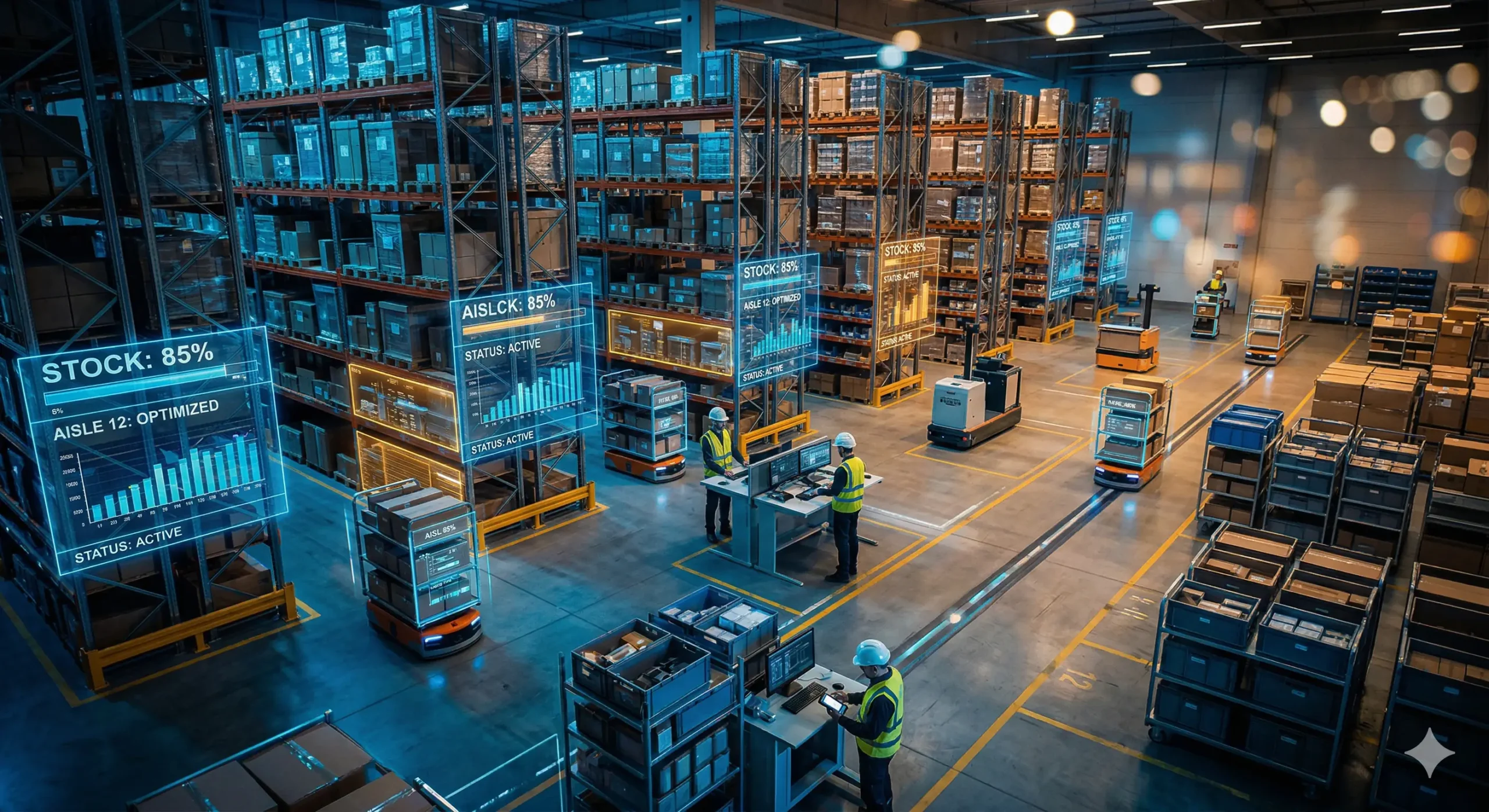
The End of the Guessing Game in the Warehouse
For decades, managing inventory felt like trying to solve a puzzle while someone kept adding new pieces. You were stuck between the fear of running out of stock and the cost of holding too much.
Enter Artificial Intelligence. In 2026, AI tools aren’t just an experimental luxury; they are the backbone of efficient commerce. They’ve turned the reactive “oops, we’re out” into a proactive “we’ve already ordered more.”
Think of these tools as a digital crystal ball that actually works. Instead of relying on a manager’s gut feeling, businesses are now using data-driven insights to keep their shelves perfectly balanced.
In this guide, we will explore how AI is reshaping the stockroom and which tools are currently leading the charge for businesses that want to stay competitive and lean.
Why Your Spreadsheet Isn’t Enough Anymore
Traditional inventory management relies on historical data, usually tucked away in a dusty spreadsheet. It tells you what happened last month, but it has no idea what is happening tomorrow.
AI tools differ because they ingest real-time data from hundreds of sources. They look at local weather patterns, social media trends, and even global shipping delays to adjust your stock levels instantly.
Imagine a sudden heatwave is forecasted for next week. An AI system sees this and automatically increases the order for cold beverages before your human team even notices the temperature rising.
This shift from descriptive analytics (what happened) to predictive analytics (what will happen) is the single biggest advantage of modern inventory software. It removes the stress of the unknown.
The Core Pillars of AI-Driven Inventory
To understand why these tools are so effective, we need to look at the three main things they do better than any human or traditional software could ever hope to achieve alone.
1. Precision Demand Forecasting
AI doesn’t just look at sales; it looks at the “why” behind the sales. By analyzing seasonal cycles and consumer behavior, it creates a much more accurate map of future demand.
It’s like the difference between using a paper map and a modern GPS with live traffic updates. The AI reroutes your inventory strategy based on the obstacles it sees appearing on the horizon.
2. Automated Replenishment
One of the most tedious tasks for any warehouse manager is placing orders. AI automates this by setting dynamic reorder points that change based on lead times and sales velocity.
If a supplier in another country is experiencing a strike, the AI can detect the slowdown and place orders earlier or find a secondary source to ensure your shelves stay full.
3. Warehouse Space Optimization
Inventory management isn’t just about how much you have; it’s about where you put it. AI analyzes which items are frequently bought together and suggests better layouts for your warehouse floor.
This reduces the “pick time” for your staff. By placing high-velocity items near the shipping docks, you save thousands of footsteps and hours of labor every single month.
Top AI Inventory Tools to Watch in 2026
The market is flooded with options, but a few have risen to the top by offering deep integration and user-friendly interfaces. Here is a breakdown of the current heavy hitters.
| Tool Name | Key Strength | Ideal User |
|---|---|---|
| Oracle NetSuite | End-to-end ERP integration | Large Enterprises |
| Fishbowl | Manufacturing & QuickBooks sync | Mid-sized Manufacturers |
| ShipHero | High-volume e-commerce shipping | Shopify & Amazon Sellers |
| Cin7 | Omnichannel sales tracking | Multi-channel Retailers |
Oracle NetSuite: The Enterprise Heavyweight
NetSuite has integrated AI deep into its supply chain module. It’s best for companies that need their inventory to talk to their accounting, HR, and sales departments in one language.
Its predictive risk portlet is a standout feature. It flags potential stockouts weeks in advance and suggests the most cost-effective shipping method to bridge the gap.
While the setup is intensive, the depth of analysis is unparalleled. It’s the “command center” approach for businesses with complex, global supply chains that cannot afford errors.
ShipHero: The E-commerce Specialist
If you are moving thousands of packages a day through Shopify or BigCommerce, ShipHero is built for your specific headaches. It focuses heavily on the “shipping” side of inventory.
The AI here excels at batching orders. It tells your warehouse team exactly which path to walk to pick twenty orders at once, significantly cutting down on operational costs.
It also provides real-time visibility across multiple warehouses. If one location is low on an item, the AI can automatically route the order to the warehouse that has plenty of stock.
Implementation: Moving Beyond the Fear
Adopting AI can feel intimidating. Many managers fear they will lose control or that the machine will make a massive, expensive mistake that ruins their quarterly budget.
The best way to start is through a “human-in-the-loop” model. You don’t have to let the AI place orders automatically on day one; you can let it suggest orders that you then approve.
Over time, as the AI proves its accuracy, you can slowly remove the manual guardrails. This builds trust within the team and allows everyone to see the benefits without the initial panic.
Data hygiene is the most important part of this transition. If your current stock counts are messy, the AI will produce messy results. Clean your data before you plug in the robots.
The Financial Impact of Smart Logistics
At the end of the day, inventory is just cash sitting on a shelf. The faster you turn that inventory back into cash, the healthier your business becomes for future growth.
AI reduces “dead stock”—items that sit for months and eventually have to be sold at a loss or thrown away. By only ordering what you need, you free up capital for other projects.
Most businesses using AI tools report a 10-20% reduction in holding costs within the first year. In a world of tight margins, that is often the difference between a profit and a loss.
The ROI isn’t just in the warehouse; it’s in customer satisfaction. Nothing kills a brand’s reputation faster than an “out of stock” button when a customer is ready to buy.
Looking Toward 2027 and Beyond
We are already seeing the next wave: computer vision. Instead of scanning barcodes, cameras in the warehouse will “see” the inventory and update the system in real-time as items move.
Drones are also beginning to take over the tedious task of cycle counting. Instead of a person on a scissor lift counting boxes, a drone flies the aisles at night and updates the database.
The future of inventory is invisible. It will happen quietly in the background, ensuring that the right product is always in the right place at the right time without anyone breaking a sweat.
Starting now gives you a massive head start. While your competitors are still struggling with manual counts, you’ll be focused on scaling your business and delighting your customers.
Quick Tips for Success
- Choose a tool that integrates with your current sales channels (Shopify, Amazon, etc.).
- Spend at least 30 days cleaning your historical data before full implementation.
- Involve your warehouse floor staff early; they know the practical bottlenecks AI needs to solve.
- Look for tools that offer “What-If” scenario planning for unexpected market shifts.