The Evolution of Job Site Safety
Safety has always been the cornerstone of industrial and construction environments. For decades, site managers relied on manual inspections and safety officers to ensure that protocols were followed consistently.
While human oversight is invaluable, it is naturally limited by physical presence and the fatigue of repetitive tasks. A supervisor cannot watch every corner of a ten-acre site simultaneously.
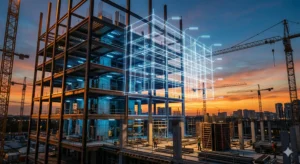
This is where Artificial Intelligence (AI) enters the narrative. By integrating smart algorithms with existing surveillance, companies are moving from reactive safety measures to proactive, real-time prevention.
Understanding Computer Vision in Safety
At the heart of modern monitoring is a technology known as computer vision. This allows standard site cameras to “see” and interpret visual data much like a human would, but with significantly more precision.
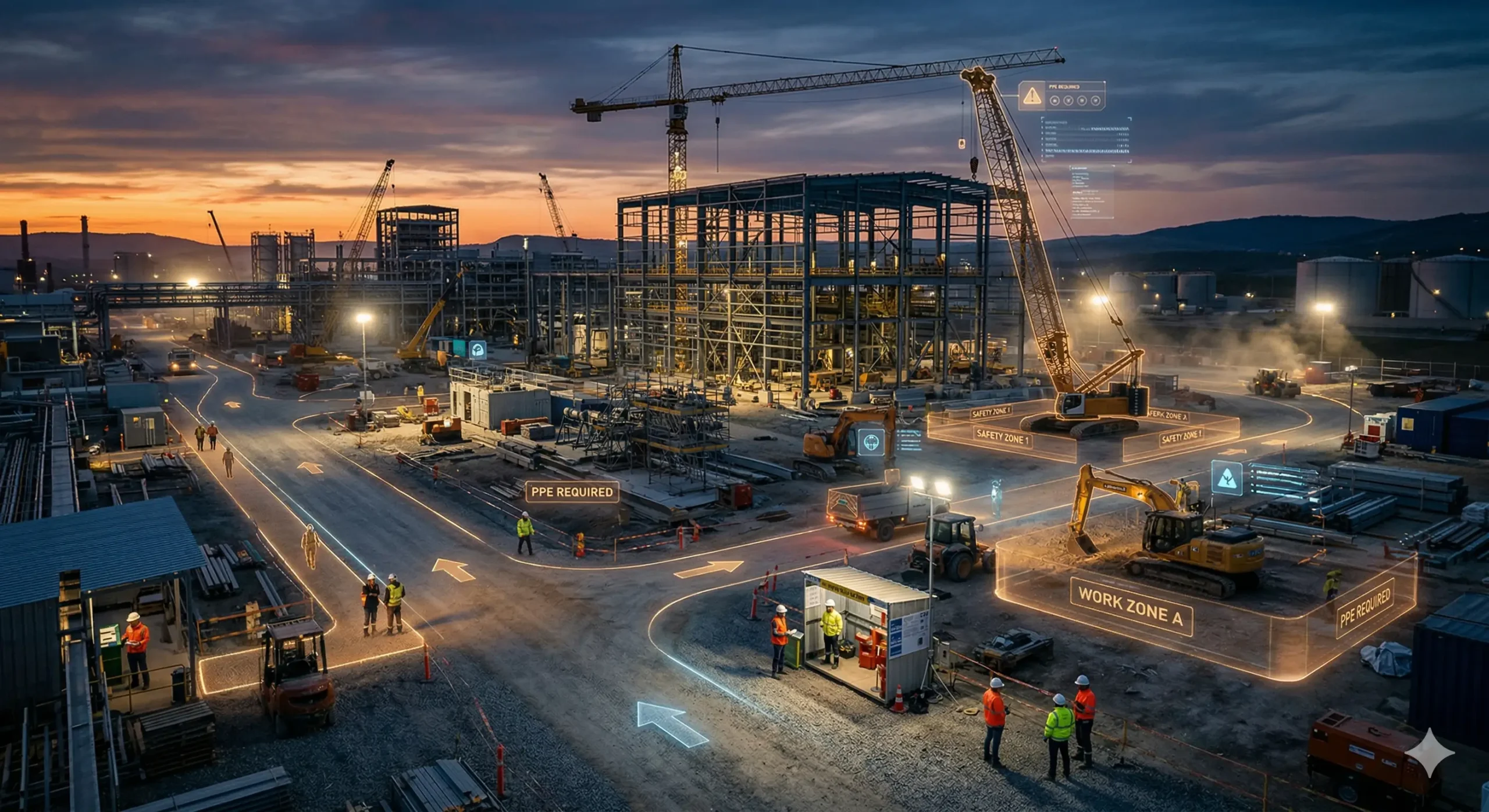
For example, an AI system can be trained to recognize the specific shape and color of a high-visibility vest or a hard hat. If a worker enters the frame without this equipment, the system logs a violation instantly.
Short Illustration: Imagine a camera mounted on a crane. It scans the ground below, automatically flagging any personnel walking within the swing radius of the heavy machinery.
Real-Time Hazard Detection
AI doesn’t just look for missing gear; it monitors behavior and environmental conditions. It can detect a liquid spill on a warehouse floor or identify a fire hazard before a human might notice the smoke.
By analyzing movement patterns, these systems can also identify ‘near-misses.’ These are incidents where an accident almost happened but didn’t, providing crucial data to prevent a future tragedy.
Moving beyond simple observation, these systems can trigger immediate alarms, sending alerts to the worker’s wearable device or the supervisor’s tablet in milliseconds.
The Impact of Predictive Analytics
Monitoring is only half the battle. The true power of AI at livetrackersxyz.com lies in its ability to predict where the next accident is likely to occur based on historical data.
By processing thousands of hours of footage, AI identifies ‘hotspots’ where safety protocols are frequently ignored or where environmental factors create consistent risks.
Insight Box: Data-driven safety cultures reduce insurance premiums and improve employee morale by proving a commitment to worker well-being.
Key Statistics in AI Safety Adoption
The transition to AI-integrated safety monitoring is backed by compelling data that highlights both efficiency and life-saving potential.
- 40% Reduction: Companies using AI-driven monitoring have reported up to a 40% decrease in workplace injuries.
- 95% Accuracy: Modern computer vision models achieve over 95% accuracy in detecting PPE compliance.
- Instant Alerts: AI reduces the time to report a safety breach from hours to less than 2 seconds.
- 24/7 Oversight: Automated systems provide 100% coverage of a site, regardless of lighting or weather conditions.
Wearable Integration and IoT
AI monitoring isn’t limited to stationary cameras. The Internet of Things (IoT) has introduced smart helmets and vests equipped with sensors that track vitals and location.
If a worker’s heart rate spikes or their body temperature reaches a dangerous level, the AI alerts them to take a break. This is vital for preventing heat exhaustion on outdoor sites.
Short Illustration: A worker falls from a low-level platform. Their smart vest detects the sudden G-force change and immediately broadcasts their GPS coordinates to the medical team.
Overcoming Implementation Challenges
While the benefits are clear, integrating AI into a job site requires careful planning. Privacy is often the most significant concern among the workforce.
To address this, many systems use ‘anonymization’ features. The AI can detect a safety violation without storing the specific facial features of the individual, focusing on the action rather than the person.
There is also the matter of technical infrastructure. Reliable high-speed internet and edge computing are necessary to ensure the AI processes data without lag.
Cost-Benefit Analysis
The initial investment in AI hardware and software can be substantial. However, the long-term ROI is found in reduced legal fees, lower insurance costs, and fewer project delays.
When a site is shut down for an accident investigation, the costs can reach thousands of dollars per hour. Preventing just one major incident often covers the cost of the entire AI system.
The Future: Toward Autonomous Safety
As we look forward, we see AI becoming even more autonomous. We are moving toward a future where drones perform safety fly-overs and autonomous rovers patrol dangerous zones.
These machines can enter environments that are too toxic or structurally unsound for humans, providing a live feed and hazard analysis without putting a single life at risk.
The goal is not to replace human safety officers but to provide them with a ‘superpower’ version of oversight that makes the zero-accident goal a reality.
Conclusion
Using AI for job site safety monitoring is no longer a futuristic concept; it is a practical necessity for the modern industrial age. It transforms safety from a checklist into a live, breathing ecosystem.
By leveraging computer vision, predictive analytics, and wearable tech, companies can protect their most valuable asset: their people. At livetrackersxyz.com, we believe the smartest site is the safest site.