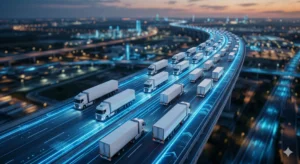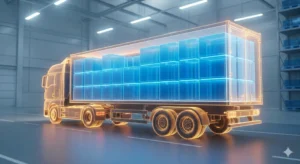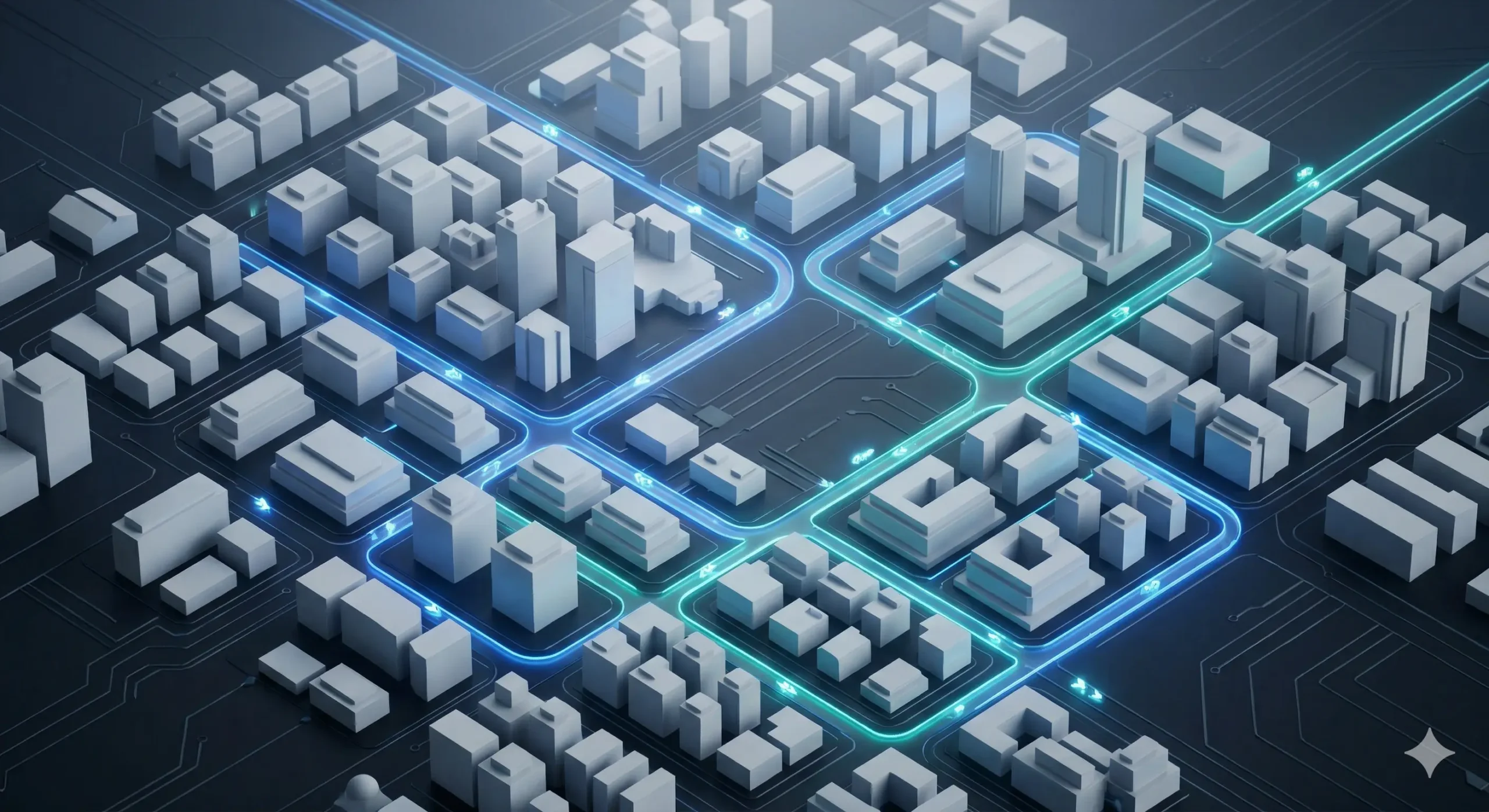
The Evolution of the Delivery Puzzle
Logistics has always been a complex game of chess. In the past, dispatchers relied on paper maps and local knowledge to plot out driver paths. It was a functional system, but it was far from perfect.
Today, the sheer volume of e-commerce has made manual planning nearly impossible. Customers expect packages in hours, not weeks. This is where Artificial Intelligence (AI) steps in to solve the ‘Traveling Salesman Problem’ at scale.
At livetrackersxyz.com, we see how technology transforms raw data into actionable paths. AI doesn’t just look at a map; it understands the living, breathing pulse of a city to find the most efficient journey possible.
Understanding the Core of AI Routing
Traditional routing software uses static logic, meaning it follows a set of pre-defined rules. If Path A is shorter than Path B, it chooses A. However, static logic fails when a sudden accident occurs on Path A.
AI route optimization uses machine learning algorithms to analyze historical and real-time data. It looks at thousands of variables simultaneously to predict which path will actually be the fastest at 3:00 PM on a rainy Tuesday.
Think of it as a seasoned driver who has memorized every shortcut in the city, but with the added ability to see through walls and predict the future. It turns chaos into a streamlined sequence of stops.
The Power of Predictive Analytics
Predictive analytics is the secret sauce of AI logistics. By studying years of traffic patterns, the system can anticipate gridlock before it even happens. It knows when school zones become active or when a stadium event will clog the main veins of a city.
For example, if a grocery delivery service knows that Friday evenings are notoriously slow in a specific neighborhood, the AI will automatically shift those deliveries to an earlier window or a different driver entirely.
Insight: AI optimization can reduce total mileage for a fleet by up to 20%, significantly lowering carbon footprints and vehicle wear.
Real-Time Adaptation: The Dynamic Edge
The real world is unpredictable. A delivery van might encounter a closed bridge, a sudden thunderstorm, or a customer who isn’t home. In a manual system, these small hiccups cause a massive ripple effect of delays.
AI-driven systems communicate with drivers in real-time. If a delay occurs at Stop 3, the algorithm instantly recalculates Stops 4 through 20. This ensures that the rest of the day stays on track without the dispatcher lifting a finger.
This level of responsiveness is vital for ‘last-mile’ delivery. Since the last mile is often the most expensive part of the journey, even saving five minutes per stop can result in massive monthly savings for a business.
Machine Learning and Continuous Improvement
One of the most fascinating aspects of AI is that it gets smarter every day. Every time a driver completes a route, the system collects data on how long each stop took and which turns were actually made.
If the AI consistently suggests a turn that drivers find difficult due to a tight corner, it eventually learns to stop suggesting it. It adapts to the physical reality of the road based on human feedback and GPS telemetry.
This creates a feedback loop where the software becomes customized to the specific fleet and territory it serves. It moves away from generic calculations toward hyper-local expertise.
The Economic Impact of Smart Routing
For business owners, AI routing isn’t just about speed; it is about the bottom line. Efficiency translates directly into reduced fuel consumption and lower labor costs. When drivers spend less time idling in traffic, the company saves money.
Furthermore, AI allows for better ‘load balancing.’ It ensures that one driver isn’t overwhelmed while another has an empty van. The software distributes work evenly based on vehicle capacity and driver hours.
- Fuel Savings: Companies often see a 15-25% reduction in fuel costs after implementing AI.
- Time Efficiency: Delivery windows are met with 98% accuracy compared to the 70-80% seen in manual routing.
- Asset Longevity: Fewer miles driven means vans stay in service longer with fewer repairs.
- Customer Retention: Precise ETAs build trust and lead to repeat business.
Enhancing the Customer Experience
We have all experienced the frustration of a ‘delivery between 8 AM and 6 PM’ notification. It tethers the customer to their home and creates a poor brand experience. AI removes this ambiguity with high-precision windows.
Because the AI accounts for service time (the time it takes to walk from the van to the door), it provides customers with a 20-minute arrival window. This transparency is a massive competitive advantage in 2026.
A small example: A local florist using AI can tell a bride exactly when her bouquets will arrive, allowing her to coordinate with the photographer perfectly. That precision creates value that goes far beyond the delivery itself.
Sustainability and the Green Fleet
In the modern era, sustainability is a core requirement for many consumers. AI helps companies meet ‘Green’ goals by minimizing ’empty miles’—the distance driven with an empty cargo hold.
By optimizing the sequence of pickups and drop-offs, AI ensures that vehicles are utilized to their maximum potential. This reduces the number of trucks on the road, leading to less congestion and lower urban emissions.
Many AI platforms now also prioritize routes for electric vehicles (EVs), accounting for charging station locations and battery depletion rates based on the weight of the cargo and the incline of the roads.
Looking Ahead: The Future of AI Logistics
As we move further into 2026, we are seeing AI integrate with autonomous drones and sidewalk robots. The ‘brain’ remains the same, but the ‘feet’ are changing. AI will soon manage multi-modal fleets where vans act as hubs for smaller robots.
The complexity of managing a fleet of drones, vans, and bikes simultaneously is a task only AI can handle. We are entering an era where delivery is no longer a logistical hurdle, but a seamless background utility of modern life.
For beginners entering this space, the takeaway is simple: AI is not a replacement for human drivers, but a powerful co-pilot that handles the math so the humans can focus on the service.
Conclusion
AI route optimization is more than just a fancy GPS. It is a comprehensive system that balances economics, human behavior, and environmental impact. It allows businesses of all sizes to compete on a global stage.
Whether you are a small business owner or a curious tech enthusiast, understanding these systems is key to navigating the future of commerce. At livetrackersxyz.com, we believe that the best routes are the ones that save time, save money, and keep the world moving forward.