The Evolution of the Logistics Puzzle
Imagine a warehouse at midnight. A fleet of trucks sits waiting while dispatchers scramble to fit dozens of odd-sized crates into trailers. It is a high-stakes puzzle where the pieces change shape constantly.
For decades, this process—known as load planning—was done manually. Experienced workers used clipboards and intuition to decide which pallet went where, hoping to balance weight and maximize space.
However, as global commerce accelerates, the old ways are no longer enough. The complexity of modern supply chains requires something faster and more precise than human estimation.
This is where Artificial Intelligence steps in. By treating load planning as a data problem rather than a physical chore, AI is transforming how we move goods across the globe.
Understanding AI Load Planning
At its core, AI load planning is the use of sophisticated algorithms to determine the most efficient way to arrange cargo. It takes into account every possible variable that a human might overlook.
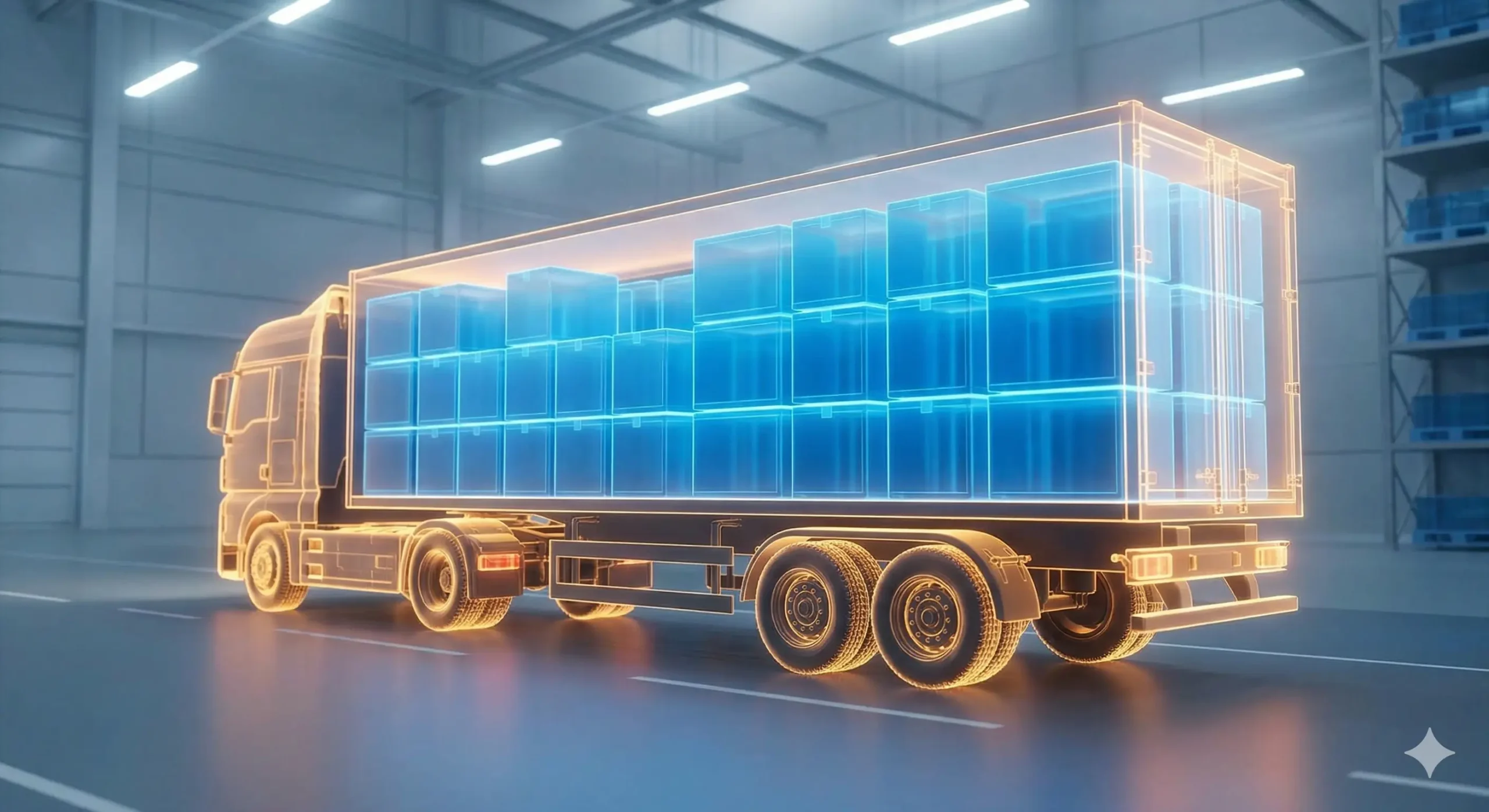
Think of it like a game of professional-level Tetris. The AI considers the dimensions, weight, and fragility of every item. It also accounts for the specific constraints of the vehicle being used.
Beyond physical space, these systems analyze delivery sequences. If a truck has five stops, the AI ensures the items for the last stop aren’t buried behind the items for the first stop.
This logic prevents “double handling,” a common inefficiency where workers must unload and reload items just to reach a specific package. AI eliminates this frustration before the truck even leaves the dock.
The Technical Magic Behind the Scenes
AI doesn’t just guess; it calculates. It uses a branch of mathematics called combinatorial optimization. This sounds complex, but it essentially means finding the best choice among millions of possibilities.
Machine learning models look at historical data to improve over time. For instance, if a certain type of packaging often gets crushed when placed at the bottom, the AI learns to prioritize top-loading for those items.
Furthermore, computer vision can now be integrated into the process. Cameras at the loading dock can scan pallets in real-time, feeding exact dimensions into the AI to adjust the plan on the fly.
This adaptability is crucial. In a busy shipping environment, things rarely go exactly according to plan. Having an AI that can recalculate a load in seconds is a massive competitive advantage.
Comparing Traditional vs. AI-Driven Methods
To truly appreciate the shift, it helps to see the two methods side-by-side. The differences in speed and accuracy are often staggering for those new to the technology.
| Feature | Manual Planning | AI-Driven Planning |
|---|---|---|
| Planning Time | 30–60 minutes per load | Seconds to minutes |
| Space Utilization | Usually 70–80% | Often exceeds 90% |
| Error Rate | High (human oversight) | Very Low (data-driven) |
| Re-routing Flexibility | Difficult and slow | Instantaneous updates |
As the table illustrates, the jump in efficiency isn’t just a small improvement. It is a fundamental shift in how logistics managers approach their daily operations.
Key Benefits for the Modern Business
The most immediate benefit of using AI for load planning is cost reduction. When you pack a truck more efficiently, you need fewer trucks on the road overall.
Fewer trucks mean lower fuel consumption and reduced maintenance costs. In an era of fluctuating oil prices, these savings can be the difference between profit and loss.
There is also the human element to consider. Manual load planning is incredibly stressful for dispatchers. By automating the heavy lifting, these employees can focus on more strategic tasks.
Customer satisfaction also sees a boost. With optimized loading, goods are less likely to be damaged in transit, and delivery windows are met with much higher consistency.
Environmental Impact and Sustainability
Logistics is a major contributor to global carbon emissions. One of the most effective ways to reduce this footprint is to ensure that no truck is ever driving around with empty space.
AI load planning directly supports sustainability goals by maximizing every cubic inch of trailer space. It effectively does more with less, which is the heart of green logistics.
Consider a company that manages a fleet of 100 trucks. If AI can improve load density by just 10%, that company could potentially remove 10 trucks from the road daily.
This reduction in “empty miles” significantly lowers the CO2 output of the entire operation. For companies aiming for Net Zero targets, AI is an essential tool in their arsenal.
Industry Statistics and Performance Data
The data surrounding AI adoption in logistics is compelling. Companies that have made the switch often report rapid returns on their initial investment.
- Capacity Increase: Many firms report a 12-15% increase in total cargo capacity without adding new vehicles.
- Cost Reduction: Operational costs associated with loading and fuel typically drop by 10% within the first year.
- Time Savings: Warehouse staff spend roughly 40% less time on administrative planning tasks.
- Carbon Reduction: Optimized routing and loading can lower a fleet’s carbon footprint by up to 15%.
These numbers highlight why the logistics industry is moving so quickly toward automation. The financial and environmental incentives are simply too large to ignore.
Overcoming Implementation Challenges
While the benefits are clear, moving to an AI system isn’t as simple as flipping a switch. It requires high-quality data to function correctly.
If your inventory system has incorrect weights or dimensions for your products, the AI will create a plan that doesn’t work in reality. Clean data is the fuel for this technology.
There is also the challenge of cultural change. Workers who have planned loads manually for twenty years may be skeptical of a computer telling them what to do.
Successful implementation requires training and a phased approach. Showing the team how the tool makes their jobs easier—rather than replacing them—is key to long-term success.
The Future of Smart Logistics
We are only at the beginning of what AI can do for load planning. In the near future, we will see these systems integrate with autonomous vehicles.
Imagine a trailer that can communicate its own weight and balance to the AI in real-time, adjusting its suspension or requesting a load shift automatically.
We might also see predictive load planning, where AI anticipates orders based on seasonal trends and begins suggesting load configurations before the orders are even placed.
This level of foresight will turn logistics from a reactive industry into a proactive one, where bottlenecks are solved before they ever occur.
Final Thoughts for Curious Learners
AI load planning is a perfect example of how technology can solve age-old problems. It takes a chaotic, manual process and turns it into a streamlined, scientific operation.
For those exploring this field, the takeaway is clear: efficiency is no longer just about working harder. It is about working smarter by leveraging the power of data.
As we look toward the future of livetrackersxyz.com and the wider industry, AI will remain the cornerstone of a faster, greener, and more reliable world of shipping.