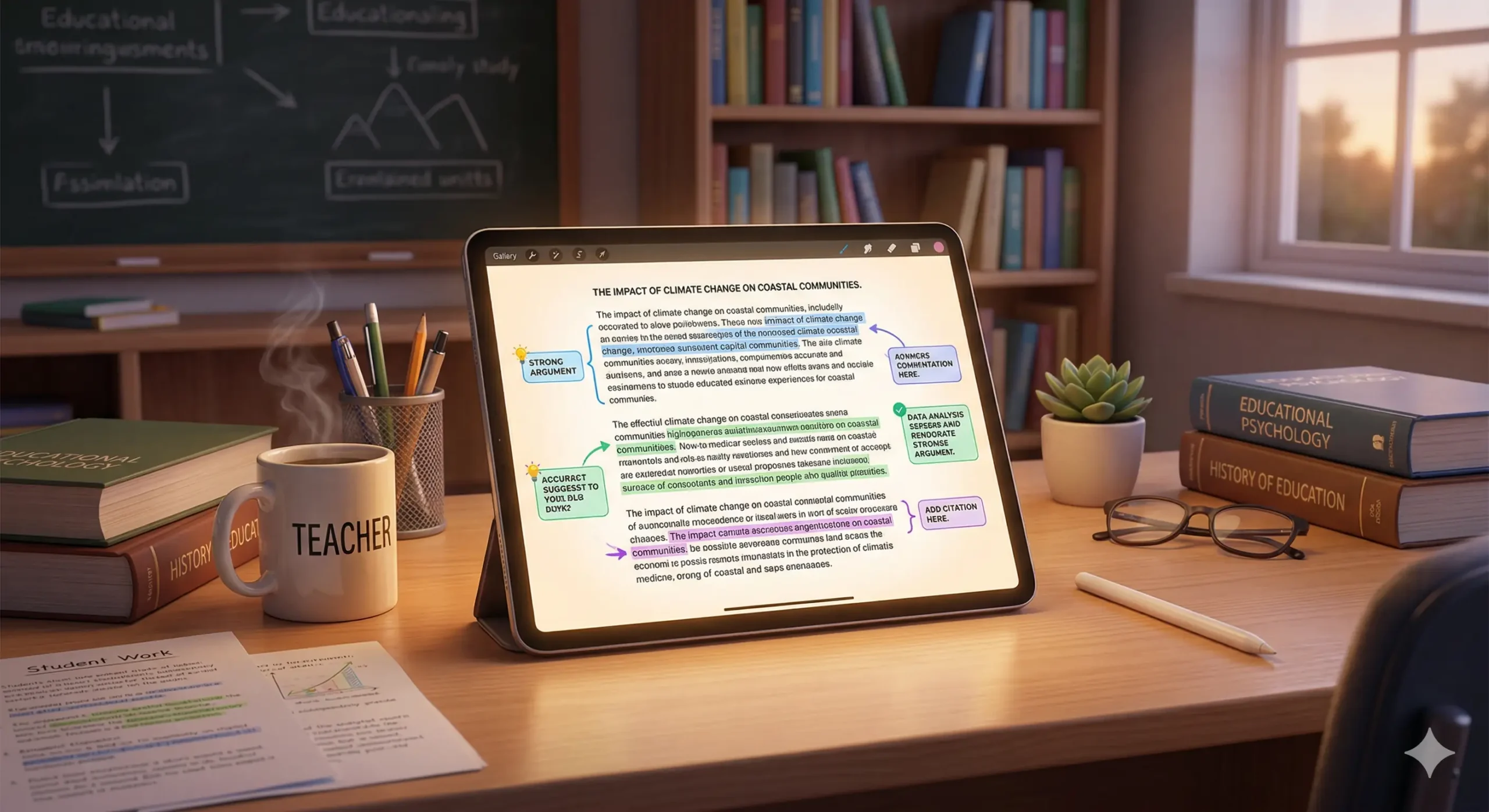

The Modern Evolution of the Classroom
For decades, the image of an exhausted educator hunched over a mountain of papers has been a staple of academic life. Grading is often the most time-consuming part of teaching, frequently encroaching on personal time and lesson planning.
As we move further into the digital age, artificial intelligence is stepping in to offer a much-needed reprieve. These aren’t just automated scanners; they are sophisticated systems designed to understand nuances in student work.
At livetrackersxyz.com, we recognize that the goal of technology in schools isn’t to replace the teacher. Rather, it is to provide them with the high-speed data and support they need to be more effective mentors.
Think of AI grading like a high-end GPS for a cross-country road trip. It doesn’t drive the car for you, but it keeps you on the right path, identifies roadblocks early, and helps you reach your goal with far less mental fatigue.
Understanding the AI Advantage
Traditional grading often suffers from human limitations, such as fatigue or unconscious bias. After grading fifty essays, even the most dedicated instructor might start to lose their edge or consistency.
AI tools bring a level of unwavering objectivity to the preliminary stages of assessment. They can quickly identify patterns in student errors, whether it is a recurring grammatical slip or a fundamental misunderstanding of a math concept.
By automating the repetitive parts of feedback, educators can focus on the higher-order thinking tasks. This creates a more balanced environment where students receive faster responses while the quality of that feedback remains high.
Prominent Tools Reshaping Feedback
Several platforms have emerged as leaders in this space, each catering to different academic needs. From STEM subjects to the humanities, there is likely an AI tool specifically designed for the task at hand.
Gradescope for Science and Math
Gradescope is a heavy hitter in the world of STEM. It allows teachers to grade paper-based exams and digital assignments in a fraction of the time usually required.
The AI groups similar student answers together. If twenty students made the same error in a physics problem, the teacher can grade them all at once, providing a single, comprehensive explanation for the entire group.
Brisk Teaching and Writing Support
For English and Social Studies, Brisk Teaching functions as a clever Chrome extension that lives where the teacher works. It can analyze Google Docs and provide instant feedback based on specific rubrics.
It can even detect if a student’s writing style has suddenly changed, suggesting where AI may have been misused. This allows for a deeper conversation about academic integrity rather than just a simple penalty.
Grammarly and the Art of the Edit
Grammarly is often seen as a simple spell-checker, but its educational versions offer deep insights into tone and clarity. It helps students learn through correction rather than just fixing mistakes for them.
When a student sees why a sentence is passive or why a word choice is repetitive, they are engaging in a learning moment. The AI serves as a 24/7 writing tutor that never tires of correcting the same mistake.
A Comparison of Traditional vs. AI-Assisted Feedback
To better understand the shift, let us look at how these two methods compare in a typical classroom setting. While both have merits, the hybrid approach is clearly winning out.
| Feature | Traditional Grading | AI-Assisted Grading |
|---|---|---|
| Turnaround Time | 3–7 Days | Instant to 24 Hours |
| Consistency | Variable based on fatigue | High and objective |
| Personalization | Deep but limited in scale | Broad and data-driven |
| Data Insights | Manual tallying required | Automated class-wide metrics |
Maintaining the Human Connection
One of the primary concerns with AI in education is the loss of the personal touch. However, the most successful implementations use AI to facilitate more human interaction, not less.
When an AI identifies that a specific student is struggling with a concept, it alerts the teacher. This allows the teacher to spend their saved time sitting down for a one-on-one session with that student.
We must view these tools as assistants that handle the “what” and the “how,” so teachers can focus on the “why.” The nuance of a student’s emotional state or personal struggles is still something only a human can navigate.
Implementing AI Tools Effectively
If you are looking to integrate these tools into your workflow, it is best to start small. Trying to adopt five new platforms at once can be more overwhelming than helpful.
- Start with one subject: Choose the area where you spend the most time grading and find a tool tailored for it.
- Be transparent with students: Explain how the AI is being used. When students know it is a tool for their growth, they are more likely to engage with the feedback.
- Always review the output: Never let the AI have the final word. Use its suggestions as a draft that you refine with your professional expertise.
The Future of Personalized Learning
Looking forward, we can expect AI tools to become even more predictive. Imagine a system that suggests a specific reading assignment because it noticed a student struggled with a particular quiz question.
This level of hyper-personalization was once a dream for educators with thirty or more students per class. Now, it is becoming a tangible reality that helps bridge the gap between different learning speeds.
As these tools evolve, the focus will shift from simply “grading” to truly “guiding.” The classroom of tomorrow is one where no student falls through the cracks because the data was there to catch them.
Final Thoughts
AI tools for grading and feedback represent a significant milestone in educational technology. They offer a way to manage the administrative burden while enhancing the quality of student interactions.
By embracing these innovations, we can return the focus to what matters most: the joy of teaching and the excitement of learning. It is a partnership between human wisdom and digital precision.
Explore the options available today and see how a little bit of AI can make a world of difference in your academic journey. The future is ready, and it is remarkably helpful.