
The Quiet Revolution in Healthcare Data
For decades, the backbone of healthcare was the humble paper chart. These thick folders, overflowing with handwritten notes and stapled reports, were a testament to a patient’s history but a nightmare to navigate.
Even as we transitioned to early digital systems, the workload didn’t necessarily lighten. Doctors often found themselves spending more time clicking through menus than looking into the eyes of the people they were trying to heal.
At livetrackersxyz.com, we believe that technology should serve humanity, not the other way around. Today, Artificial Intelligence is finally fulfilling that promise by transforming how medical records are organized and utilized.
This isn’t just about faster typing or digital filing cabinets. It is a fundamental shift in how we interpret the vast sea of data that defines modern human health and wellness.
Breaking the Barrier of Data Entry
The first and most visible way AI helps is through the automation of data entry. Natural Language Processing, or NLP, allows computers to understand and transcribe the spoken word with incredible nuance.
Imagine a physician walking into an exam room. Instead of typing on a laptop, they simply speak with the patient. A background AI system listens, identifies relevant medical facts, and populates the record in real-time.
This reduces the “pajama time” many doctors face—the hours spent finishing charts at home after the clinic closes. By automating the mundane, AI restores the sacred nature of the doctor-patient relationship.
It is like having a world-class medical scribe who never gets tired, never misses a detail, and understands every medical term in the dictionary instantly.
The Power of Predictive Analytics
Managing records is one thing; understanding them is another. AI excels at finding patterns that the human eye might miss across thousands of pages of historical data.
For example, if a patient’s blood pressure is slowly trending upward over three years, a human might miss the subtle shift. An AI system, however, can flag this trend immediately and suggest an early intervention.
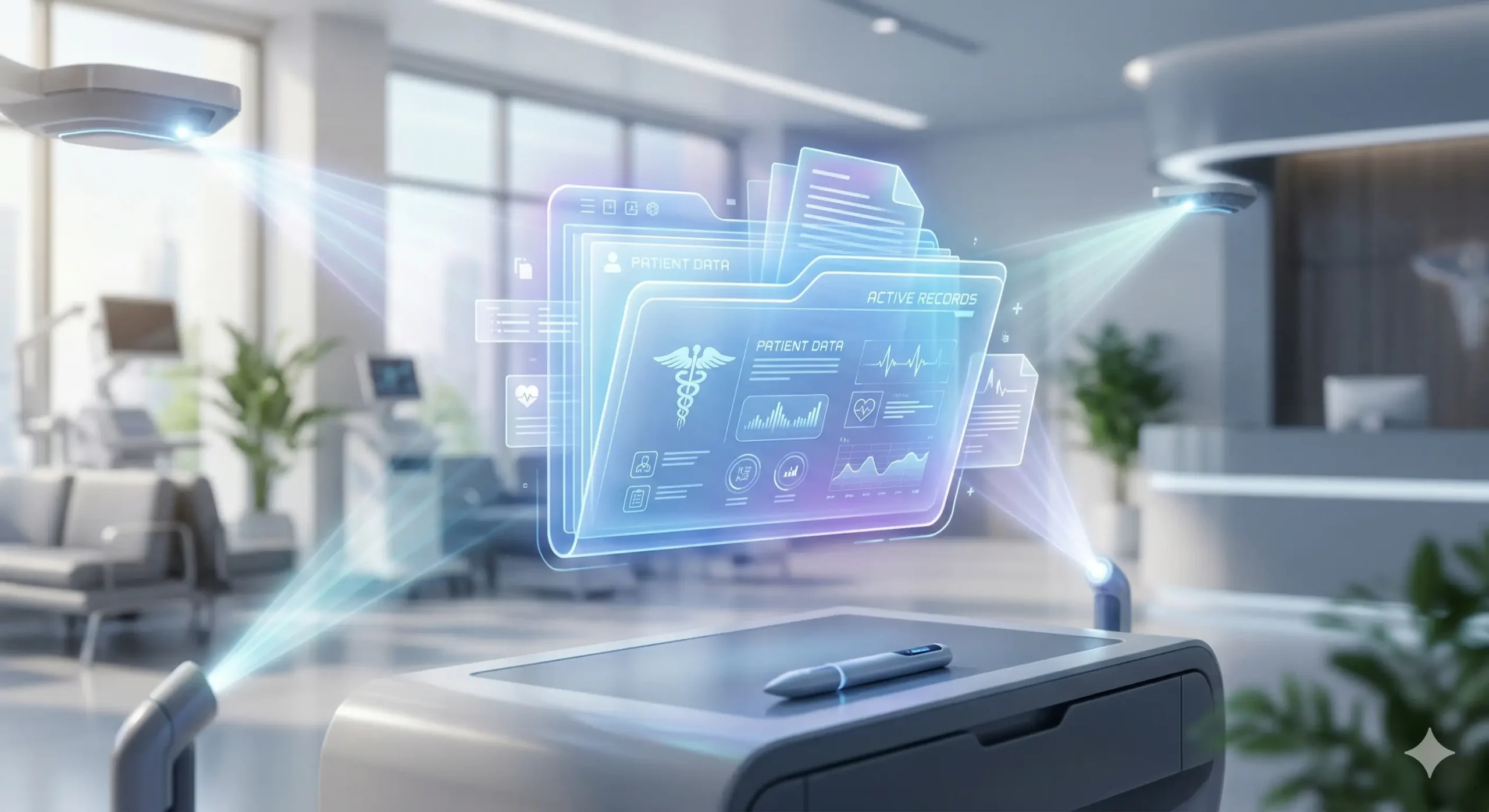
This proactive approach moves healthcare from a reactive model to a predictive one. It turns the medical record from a dusty history book into a living, breathing roadmap for future wellness.
By analyzing variables like family history, lifestyle choices, and lab results simultaneously, AI creates a holistic view of the patient that was previously impossible to synthesize manually.
Bridging the Interoperability Gap
One of the greatest frustrations in healthcare is when different systems cannot talk to each other. A specialist might not be able to see the notes from a primary care physician because they use different software.
AI acts as a universal translator. It can scan unstructured data from various sources—PDFs, images, or legacy text—and convert it into a standardized format that any system can understand.
This ensures that no matter where you go, your medical history follows you accurately. It prevents duplicate testing, which saves money and reduces the physical burden on the patient.
Think of it as a bridge connecting isolated islands of information. When every doctor has the full picture, the quality of care rises exponentially across the entire healthcare ecosystem.
Enhancing Data Security and Compliance
With great data comes great responsibility. Protecting patient privacy is not just a legal requirement under HIPAA; it is a moral imperative in the digital age.
AI manages record security by monitoring access patterns in real-time. It can detect if someone is looking at a file they shouldn’t be, or if there is an unusual spike in data downloads that might signal a breach.
Furthermore, AI helps with automated redaction. If a record needs to be shared for a research study, AI can instantly scrub all personally identifiable information while keeping the medical data intact.
This level of precision ensures that medical records remain a tool for healing rather than a liability for the patient or the healthcare provider.
AI vs. Manual Record Management
To better understand the shift, let’s look at how AI-driven systems compare to the traditional manual methods we have relied on for so long.
| Feature | Manual Management | AI-Driven Management |
|---|---|---|
| Data Entry Speed | Slow, manual typing | Instant voice-to-text |
| Error Detection | Relies on human review | Automated real-time flags |
| Data Search | Manual scrolling/searching | Instant semantic search |
| Insight Generation | Human intuition only | Algorithmic trend analysis |
Reducing Burnout and Restoring Care
The efficiency of AI isn’t just about numbers; it’s about the mental health of our healthcare workers. Clinician burnout is at an all-time high, largely driven by administrative burdens.
When an AI manages the records, the cognitive load on the doctor is significantly reduced. They are no longer data entry clerks; they are healers and diagnosticians once again.
For the patient, this means shorter wait times and more focused attention. When the “paperwork” takes care of itself, the human element of medicine can finally take center stage.
We are seeing a future where technology doesn’t distance us from our caregivers, but rather removes the barriers that were standing in the way of a true connection.
The Ethics of Automated Intelligence
As we embrace these tools, we must also remain thoughtful about their implementation. AI is a supplement to human judgment, not a total replacement for it.
At livetrackersxyz.com, we advocate for “Human-in-the-Loop” systems. This means that while the AI organizes and flags the data, the final medical decisions always remain with the qualified professional.
Ethics also involves ensuring the algorithms are free from bias. A record-management AI must be trained on diverse datasets to ensure it serves every patient equally, regardless of their background.
By maintaining a mature and cautious approach to AI integration, we can harvest the benefits of efficiency without sacrificing the integrity of the medical profession.
Looking Toward a Healthier Future
The journey toward efficient patient records is still evolving. Every day, machine learning models become more sophisticated at identifying the early markers of chronic disease.
Eventually, the medical record will be more than just a list of past ailments. It will be a dynamic partner in our daily health, providing us with personalized insights to live better lives.
The efficiency we gain today is the foundation for the breakthroughs of tomorrow. When we manage data better, we manage life better.
Thank you for joining us in exploring the intersection of technology and wellness. Stay tuned to livetrackersxyz.com for more insights into how the digital world is shaping our physical health.