The Intelligent Warehouse Revolution
Warehouses are the bustling heart of global logistics. Traditionally, they’ve relied heavily on manual processes and rigid software systems to keep goods moving. Today, that model is rapidly evolving.
Artificial Intelligence (AI) has arrived, promising to turn these traditional storage hubs into highly responsive, predictive fulfillment centers. It’s not just about robots; it’s about the intelligence orchestrating the entire flow.
At livetrackersxyz.com, we are committed to simplifying complex logistics tech. This guide explores the most impactful AI tools currently reshaping warehouse management for increased efficiency and reduced errors.
The AI Difference in Warehouse Operations
A conventional Warehouse Management System (WMS) acts like a digital filing cabinet. It records where things *are* and *should be*. But it doesn’t anticipate fluctuations or optimize flows based on changing conditions.
AI transforms this static model. Instead of just tracking inventory, AI tools predict future demand, optimize pick paths, and even manage workforce schedules based on workload forecasts.
Think of it as the difference between using a paper map versus a dynamic GPS with real-time traffic updates. The GPS doesn’t just show the roads; it guides you along the most efficient path at that exact moment.
Inventory Optimization: Predicting, Not Guessing
The core challenge in any warehouse is balancing stock levels. Too much inventory ties up cash and warehouse space; too little means stockouts and unhappy customers.
AI inventory optimization tools use predictive analytics. They crunch vast datasets—historical sales, weather patterns, economic indicators—to forecast demand with surprising accuracy.
Instead of relying on crude averages, these tools might anticipate that sunscreen sales will spike next Thursday due to an unseasonably warm forecast, allowing managers to adjust stock levels proactively.
Notes: These tools also excel at slotting optimization, recommending where items should be stored (e.g., placing frequently purchased items near packing stations) to minimize travel time.
Dynamic Routing and Pick Optimization
In a large warehouse, picking is the most labor-intensive and time-consuming task. AI dramatically reduces this inefficiency by generating optimized picking routes.
Standard routing follows fixed paths. AI routing dynamically adapts. If a picker encounters a blockage (perhaps a robotic cart is stalled), the AI reroutes them in real-time to the next item via the fastest available path.
This optimization extends to the sequence of orders as well. AI analyzes dozens of orders simultaneously, batching them intelligently so pickers can gather items for multiple customers in a single, streamlined trip.
The Rise of Collaborative Robotics and Automation
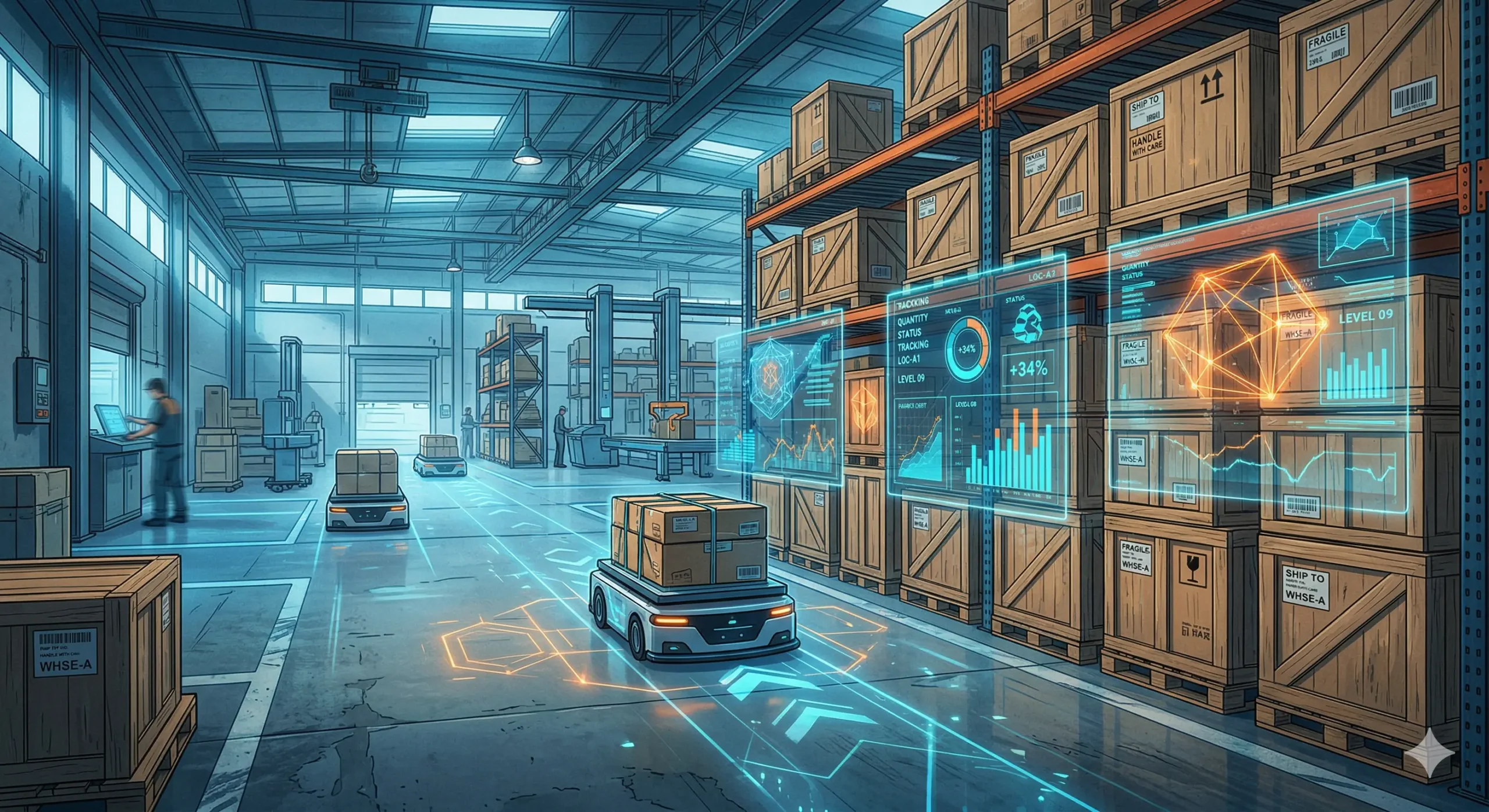
While software is crucial, AI’s physical presence in the warehouse is undeniable. Autonomous Mobile Robots (AMRs) and automated storage and retrieval systems (AS/RS) are becoming commonplace.
These robots don’t just move objects; they move *intelligently*. AMRs use computer vision and AI-driven navigation to safely navigate dynamic warehouse floors, dodging people and other equipment without needing fixed paths.
They act less like simple automated machinery and more like collaborative assistants. AMRs can follow pickers, transport full carts to packing areas, and autonomously manage put-away, allowing human workers to focus on higher-value tasks.
Workforce Management and Allocation
Perhaps less obvious than robots, AI is also optimizing human resources. Predictive AI forecasting tools don’t just predict order volume; they predict the *type* of orders.
By understanding if the day will bring numerous small orders (e-commerce style) or a few large palletized shipments (B2B style), the AI can recommend the optimal staffing levels for different sections.
This ensures you are never caught short-handed during a sudden surge or paying for idle time during a quiet lull. It helps managers make data-driven decisions rather than relying on historical averages.
Predictive Maintenance: Staying Ahead of Downtime
When crucial equipment like a conveyor belt or an automated crane breaks down unexpectedly, it can stall the entire warehouse. This is where AI predictive maintenance shines.
AI tools analyze data from sensors embedded in the equipment. By monitoring parameters like vibration, heat, and power usage, the AI learns the unique “fingerprint” of healthy operation.
If the AI detects a subtle deviation (e.g., a bearing is vibrating slightly oddly), it flags the issue and predicts potential failure, allowing maintenance teams to address the problem before it causes expensive downtime.
Finding Clarity in the Options
The warehouse technology market is vast, making it difficult to decide which AI integration is right for your operation. A structured approach is essential.
We recommend a stepwise adoption. It’s often wiser to implement one focused AI solution well rather than attempting a massive, all-at-once transformation.
- Identify the Bottleneck: Start with your biggest headache. Is it inventory stockouts? Slow pick times? Focus your initial AI efforts there.
- Clean Your Data: AI is only as good as the data it receives. Ensure your current inventory and process data is accurate and digitally accessible.
- Evaluate Integration: Choose AI tools that can integrate smoothly with your existing WMS. Avoid creating data silos.
- Consider Scalability: Your needs will change. Select tools that can grow with you and potentially integrate with other AI solutions later.
The Future is Smarter, Not Just Faster
AI is fundamentally shifting the role of the warehouse manager. You are moving from a reactive operator, constantly firefighting issues, to a strategic orchestrator focusing on optimization.
The best AI tools don’t just add speed; they add resilience. They enable your operation to gracefully handle disruptions, predict fluctuations, and ensure that promises made to customers are promises kept.
At livetrackersxyz.com, we believe that understanding and adopting these intelligent technologies isn’t optional for forward-thinking logistics providers. The intelligent warehouse isn’t a future concept—it’s the new operational standard.
Start exploring these AI tools today. The efficiency gains are significant, the error reductions are substantial, and the journey toward a smarter supply chain begins right here.