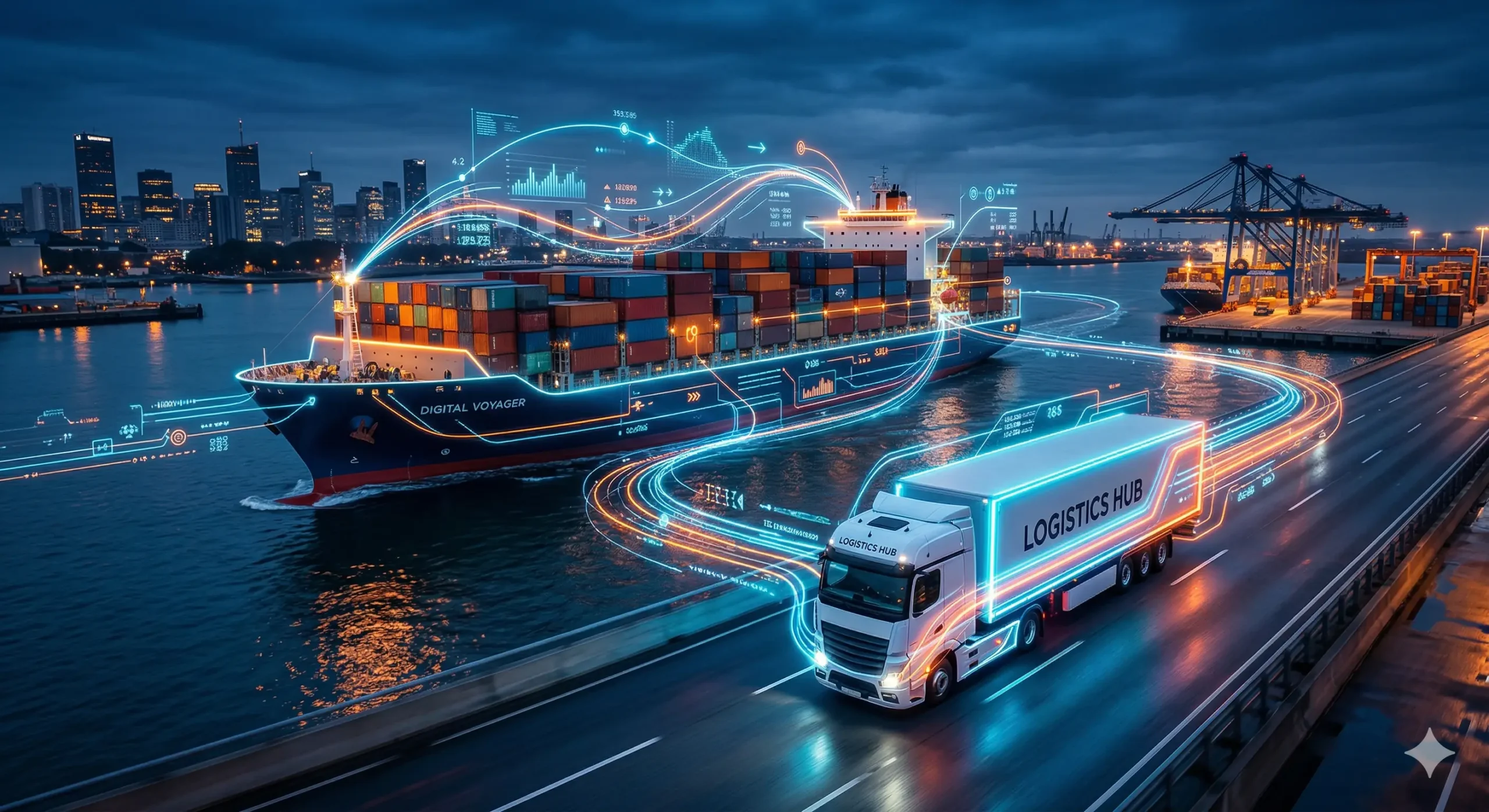
The Intelligent Future of Logistics
In the world of logistics, certainty is the most valuable currency. For years, tracking a shipment was a passive experience—you simply waited for a package to hit a checkpoint and hoped the ‘Estimated Time of Arrival’ was accurate.
By 2026, the landscape has shifted entirely. Artificial Intelligence has transformed shipment tracking from a basic map ping into a predictive science. We are no longer just seeing where a box is; we are understanding where it will be, despite weather, traffic, or port congestion.
At livetrackersxyz.com, we recognize that small businesses and global enterprises alike need more than just a tracking number. They need foresight. Let’s explore the AI tools that are making real-time transparency a reality.
Why AI is Better Than Traditional Tracking
Traditional tracking is like looking at a photo of a moving car—it tells you where the car was at a specific moment. AI tracking is more like a live GPS with a built-in meteorologist and traffic reporter. It analyzes thousands of data points to provide context.
If a storm is brewing over the Pacific, an AI tool doesn’t wait for the ship to be delayed to tell you. It recalculates the ETA the moment the weather pattern shifts. This allows businesses to manage customer expectations before a complaint even arises.
This transition from reactive to proactive management is why AI has become the backbone of modern supply chains. It’s not just about data; it’s about actionable intelligence.
Top AI Shipment Tracking Tools
1. Project44: High-Velocity Visibility
Project44 has established itself as a leader by offering an expansive network that connects carriers, shippers, and logistics providers. Its AI engine excels at ‘Predictive ETA,’ which consistently outperforms manual estimations.
The platform uses machine learning to account for historical port dwell times and even driver behavior. For a warehouse manager, this means knowing exactly when to schedule a labor crew to unload a trailer, preventing expensive idle time.
2. FourKites: End-to-End Orchestration
FourKites focuses heavily on the ‘why’ behind delays. Their AI identifies patterns in the supply chain that human analysts might miss. For instance, it can flag if a specific route consistently leads to temperature fluctuations in refrigerated cargo.
This tool is particularly useful for industries like food and pharmaceuticals, where the condition of the shipment is just as important as the arrival time. It provides a digital ‘paper trail’ of the entire journey.
3. Windward: Predictive Maritime Intelligence
Shipping by sea is notoriously difficult to track accurately. Windward uses AI and satellite imagery to provide ‘Ocean Insights.’ It can predict vessel arrivals with startling accuracy by analyzing sea states and port congestion levels.
Think of it as a digital lookout tower. It helps companies avoid the ‘black hole’ of ocean freight, ensuring that once a container leaves the dock, it stays on the digital radar until it reaches the destination port.
Key Features to Look For
When evaluating which AI tool fits your business, certain features should be non-negotiable. Here is a list of capabilities that define a high-quality tracking partner:
- Multi-Modal Tracking: The ability to track sea, air, rail, and road shipments in one single dashboard.
- Exception Management: Automatic alerts that trigger only when a shipment deviates from its planned route or schedule.
- Historical Analytics: Tools that store past data to help you choose more efficient carriers or routes in the future.
- API Integration: The software must be able to talk to your existing inventory or e-commerce platforms effortlessly.
Roadmap: Implementing AI Tracking
If you are looking to upgrade your current logistics setup, jumping in all at once can be overwhelming. We recommend a structured approach to ensure a smooth transition for your team:
- Identify Your Pain Points: Are you losing money on late fees, or are customers complaining about vague tracking info? Focus on the biggest problem first.
- Clean Your Data: Ensure your internal shipment logs are consistent. AI needs clean data to provide accurate predictions.
- Run a Pilot Program: Choose your most problematic route and track it with an AI tool for 30 days to measure the improvement in ETA accuracy.
- Scale and Integrate: Once the ROI is proven, connect the AI tool to your customer-facing notifications to provide them with real-time updates.
A Practical Comparison
While Project44 and FourKites are often compared, they serve slightly different needs. Project44 is often praised for its ease of integration and carrier network, while FourKites is frequently cited for its deep analytical capabilities and facility-level insights.
Choosing between them is a bit like choosing between a high-speed sports car and a heavy-duty truck. Both will get you there, but one is built for speed and agility, while the other is designed for heavy lifting and complex terrain.
Notes for Decision Makers
As you move forward with AI shipment tracking, keep these three things in mind to maximize your investment:
- The Human Factor: AI provides the data, but your team still needs to make the final decisions. Ensure your staff knows how to interpret AI ‘risk scores.’
- Cost vs. Value: AI tools usually involve a subscription fee. Measure the cost against what you save in ‘service failure’ fines and customer churn.
- Data Privacy: Ensure any tool you use complies with global data protection standards, especially when sharing tracking links with end customers.
The Bottom Line
The goal of AI in shipment tracking is to remove the ‘mystery’ from the supply chain. In an era where customers expect Amazon-level transparency, these tools provide the visibility needed to compete.
By using predictive intelligence, you aren’t just watching your goods move across a map—you are taking control of your business’s reputation for reliability. At livetrackersxyz.com, we believe that those who master their data today will lead their industries tomorrow.
The transition to AI tracking is no longer a luxury; it is a fundamental step toward a more resilient and responsive business model. Start small, track accurately, and let the intelligence do the heavy lifting.