
The Evolution of the Modern Classroom
For decades, assessing student progress was a slow, reactive process. Educators would hand out a test, grade it by hand, and identify gaps only after a unit was finished. By then, the class had often moved on.
In 2026, the landscape has changed. AI tools for student performance tracking have turned data into a living pulse. Teachers no longer have to wait for the end of the term to know who is struggling.
These sophisticated platforms provide a continuous stream of insights. They help bridge the gap between teaching and truly understanding, allowing for a more empathetic and effective educational experience.
The Power of Predictive Analytics
The most significant leap in student tracking is the shift from descriptive to predictive data. Traditional reports tell us what happened; AI tells us what is likely to happen next based on current trends.
By analyzing patterns in attendance, assignment completion, and quiz scores, these tools can flag a student at risk of failing weeks in advance. This allows for early intervention that was previously impossible at scale.
Insight: AI doesn’t replace the teacher’s intuition; it provides a high-resolution map so the teacher can guide the student more effectively through difficult terrain.
Identifying Engagement Beyond Grades
Grades are only one piece of the performance puzzle. Modern AI tools also track engagement metrics, such as how long a student spends on a specific reading or how many times they revisit a video tutorial.
For example, imagine a student who consistently scores well but spends triple the average time on math problems. The AI can highlight this, suggesting the student is working incredibly hard but might be missing a foundational concept.
This level of nuance helps educators distinguish between students who are naturally gifted in a subject and those who are achieving through sheer persistence, ensuring both receive the right support.
Top Platforms Shaping Education Today
Several tools have risen to the top of the EdTech sector by offering robust tracking features. While each has a different focus, they all share a commitment to data-informed growth.
- Century Tech: Uses AI to create a “nugget”-based learning path, tracking exactly where a student’s knowledge has holes and suggesting specific interventions.
- DreamBox Learning: Primarily focused on mathematics, it tracks how students solve problems in real-time, adjusting the difficulty level instantly based on their performance.
- Khan Academy (Khanmigo): This AI tutor tracks student progress across thousands of exercises, giving teachers a bird’s-eye view of class-wide mastery and individual hurdles.
Pros and Cons of Automated Tracking
While the benefits are substantial, it is important to approach these tools with a balanced perspective. Here is a brief look at the trade-offs involved in implementing AI performance tracking.
| Feature | Primary Advantage | Potential Challenge |
|---|---|---|
| Real-Time Data | Immediate feedback for students | Potential for data fatigue in teachers |
| Automated Grading | Saves hours of administrative time | May struggle with subjective or creative work |
| Personalized Paths | Students move at their own pace | Requires consistent access to devices |
A Real-World Illustration: The Proactive Pivot
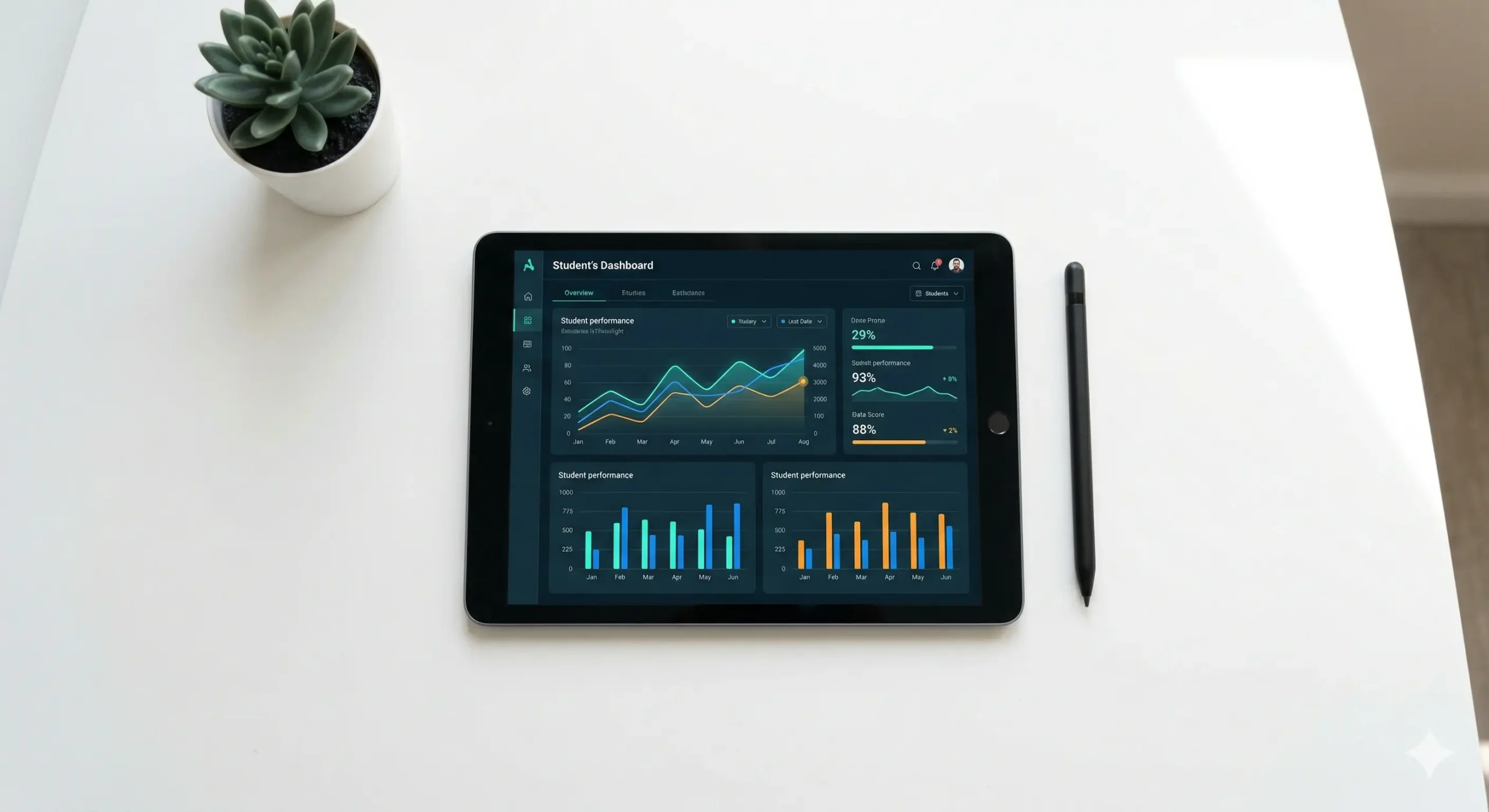
Consider a tenth-grade history teacher named Sarah. Halfway through a semester, her AI dashboard flags three students who have stopped engaging with the digital textbook during the late evening hours.
Instead of assuming they are simply unmotivated, Sarah uses this data to start a conversation. She discovers they have recently taken on part-time jobs and are struggling to balance their new schedules.
Because the AI caught the drop in engagement before it became a drop in grades, Sarah was able to adjust their deadlines and provide recorded lectures, keeping them on track for graduation.
The Role of Data Privacy and Ethics
As we rely more on tracking tools, the conversation around data privacy becomes paramount. Schools must ensure that student data is used strictly for educational improvement and not for external profiling.
Grounded education leaders prioritize platforms that offer end-to-end encryption and clear opt-out policies. It is vital that students and parents feel that their data is a tool for their benefit, not a form of surveillance.
Transparency is the key to building this trust. When students understand how their data helps them learn faster and more comfortably, they are more likely to engage with the technology in a positive way.
Strategies for Successful Implementation
If you are looking to integrate these tools into a classroom or district, a thoughtful rollout is better than a fast one. Here are a few strategies to keep in mind:
- Start with a Pilot: Test the software with one grade level or department to identify any technical hurdles before a full-scale launch.
- Focus on Teacher Training: The tool is only as good as the person interpreting the data. Invest time in showing educators how to read the dashboards.
- Encourage Student Agency: Allow students to see their own dashboards. This fosters a sense of ownership over their learning journey and goals.
The Future of Individualized Excellence
We are moving toward a future where the “average” student no longer dictates the pace of the classroom. AI tracking tools allow us to treat every student as an individual with unique needs and strengths.
While technology provides the data, the human connection remains the heart of education. These tools simply clear away the guesswork, allowing teachers to spend more time doing what they do best: inspiring students.
By embracing these advancements with a calm and grounded approach, we can create an educational system that is more inclusive, more efficient, and ultimately more successful for everyone involved.